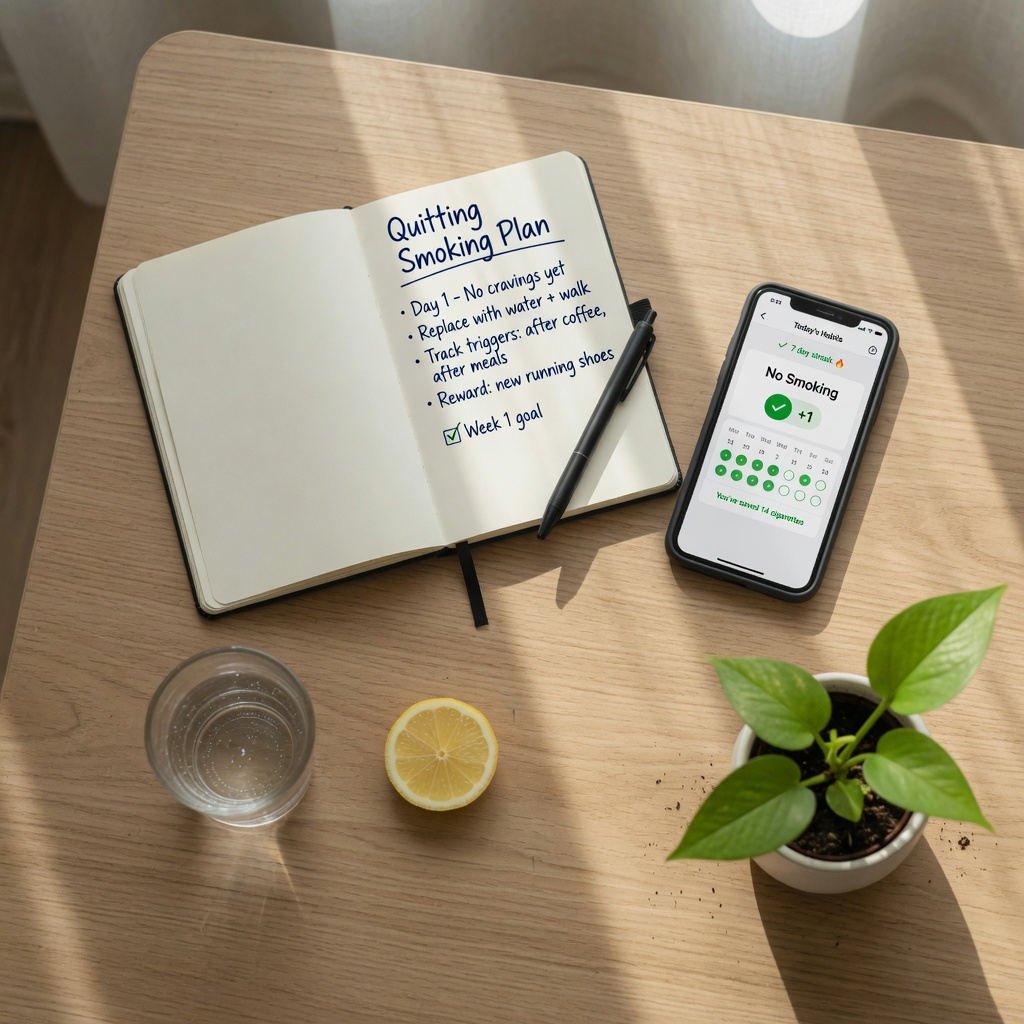
How to Validate Whether a Tobacco Health Content Direction Can Really Make Money with Minimal Cost
In mid-March 2024, in a shared rental bedroom in Hangzhou Binjiang, I used an old phone stand, a desk lamp, and CapCut to shoot 12 lip-sync videos over four nights titled "Body Changes on Day N of Quitting Smoking." The account was brand new, the background was a white wall. I spent 80 RMB on Douyin promotion, totaling about 19,000 views, 210 likes, and 7 direct messages. Of those 7 messages, 5 asked "What kind of cigarettes/e-cigarettes are you selling?" Only 1 seriously asked about how to cope with withdrawal. That week, my cash income was 0.
This experience pulled me out of the illusion that "the health content[3618736947] is huge." China's smoking population has long been publicly reported at around 300 million, with adult smoking rates still not low. There is a huge gap between the willingness to quit and the actual successful quit rate — this does not mean "postingeducational content content will monetize." Traffic can be huge, but willingness to pay can be very thin. The task of early validation is not to prove that tobacco health content "has meaning," but to use controllable money and time to prove that someone is willing to pay for a specific outcome you provide.
My view is straightforward: This direction can make money, but it earns from "specific pain points + trust + deliverable solutions," not from "righteousness." If you do broad "smoking is harmful to health," you're competing for attention with[3014225511] reports, hospital short-video accounts, and news media. If you narrow down to "how to deal with bad breath on days 3–14 of quitting," "how to manage weight rebound during quitting," or "a set of scripts for spouses who want topersuade their family to quit," you have a chance to reach real demand. Minimal-cost validation means testing the latter type of demand before you buy equipment, register a company, or stock up on inventory.
1. Write Down Three Sentences Before Validation
Many people jump straight into building matrices, buying editing services, or negotiatingproduct promotion. Irecommend first writing three sentences in yournotes first; if you can't write them, don't invest money:
1. Who is the user: For example, "people aged 25–45, smoking half a pack or more per day, searched for quitting methods in the last 30 days, and have relapsed at least once" — not "everyone who cares about health."
2. Why are they searching now: Abnormalhealth checkup results, childbirth, strong opposition from a girlfriend, recurring throat discomfort, workplace smoke-free policies — the more specific the motivation, the better the content hook.
3. What are they willing to pay for: Pure information (a comprehensive list), tools (check-in table/ quitting schedule), companionship (group or 1-on-1 Q&A), alternatives (compliant smoking cessation auxiliary products/services introduction).
If you can only answer "I'll show themeducational content content," validation will likely die on "many likes, wallet[1998121160]."
Public health reports repeatedly emphasize: the harms of tobacco are clear, but the public's understanding of specific harms and quitting paths is insufficient. This is the space for contententry point, and also theprerequisite for monetization — what users lack is not hearing "smoking is bad" again, but "what should I do at this stage."
2. Days 0–7: Rapid Testing (Target Cost 0–300 RMB)
1. Dig for "Real Questions" Using Search and Comments, Don't Brainstorm Topics
Don't shoot videos on the first night. Open Douyin, Xiaohongshu, and Zhihu to search:
Write down each: the original question, complaints/requests for solutions in comments, whether anyone asked for links or private chat. My habit is to fill 30 "user original quotes" in 2 hours, then group them into 5 topic clusters.
Passingstandard: A topic is worth making into content for testing only if comments repeatedly show "seeking method," "has anyonestuck with it," "how to do it specifically" — not just "hahaha" or "too real."
2. Open One Minimum Account on Each of Three Platforms, Don't Start with a Matrix
| Platform | Purpose | 7-Day Content Volume | Signal I Care About More |
|----------|---------|---------------------|--------------------------|
| Xiaohongshu | Search-type,saved-type demand | 6–8 image-text posts |saved rate, comments asking for details |
| Douyin/Video Account | Emotion and scene reach | 8–12 videos 20–45 sec | First-3-second retention, completion rate, DM quality |
| WeChat Official Account/Jike/Zhihu (pick one) | Long-form to build expertise | 2 articles 1500+ words | Views/saved, comment depth |
On Xiaohongshu, the industry often uses image-textsaved rate and like rate as rough measures of whether content is "needed"; short video side pays more attention to the first few seconds and completion rate. You don't need toblindly follow a specific absolute percentage, doside-by-side comparison within your own account: in the same week, which 2 piecessignificantly outperformed the other 10, those 2 topics are thefocus for next week.
3. A/B Test Content Formats, Don't Bet on One "Viral Copy"
At least two formats for the same topic, e.g., "What happens to your body 72 hours into quitting":
Also A/B test the titles:
"Counterintuitive" version: "Sore throat on day 3 of quitting, normal or a relapse signal?"
"Step-by-step" version: "I used these 5 steps to get through the first 72 hours of quitting (copyable)"
Hard indicators at the end of 7 days (personal experience line, scale proportionally to your account level):
If you can't achieve these three, don't rush to say "monetization model failed" — more commonly theentry point is too broad or content stays at emotionalemotional resonance. Narrow the topic one notch and test for another 7 days.
4. Fake Door Page / Pre-sale: Test Payment Willingness with Zero Inventory
On days 5–7, place a lightweightlanding page on the comment area or homepage of the 1–2 best-performing pieces of content:
In April 2024, I tried a round in Hangzhou: 9.9 RMB pre-sale, promoted viasocial feed + Video Account, sold 17 copies in 3 days, 1 refund. The amount was very small, but it proved two things — some people are willing to pay for "structured steps"; when the unit price is too low, Q&A time will be overwhelmed. This is more useful than empty talk about "knowledge payment prospects."
Red line for fake door pages: Don't fabricate medicalefficacy, don't promise "guaranteed to quit," don't use content todrive traffic fornon-compliant tobacco marketing. Once health contenttread on false efficacy claims, the trust costlater will rise exponentially.
3. Weeks 2–4: Small-Scale Trial Operation (Target Cost 300–1500 RMB)
Rapid testing answers "does anyone want it"; trial operation answers "can you deliverstablely and receive the second payment."
1. Only Make One Group or One Enterprise WeChat Tag in Private Domain
Irecommend not to runcommunity courses, training camps, and distribution simultaneously in the first 30 days. Only do:
Write clear group rules: no discussion of how to "smoke more enjoyably," no recommendation of unknown products, daily fixed 1valuable tips + 1 Q&A session.
Observation indicators: 7-day retention, number of active question-askers, number of people completing check-ins. The most heartbreaking data I've seen: 80 people joined the group, less than 12 were still talking on day 7 —[3582826126] your content attracts "bystander-type anxiety," not "action-type users." At this point, change the hook, not increase group size.
2. Only Choose One Delivery Form for Trial Sales
During the validation period, choose only one from three as the main path:
1. Low-price information pack (9.9–49 RMB): Validate payment habits, don't expect it to support you.
2. Light consulting (99–299 RMB / 1 session 30–45 min voice): Validate whether you can really solve problems.
3. Compliant product introduction/product promotion (commission or self-operated): Validate the "content-trust-order"pipeline,pay attention platform rules on tobacco-related, medical devices, and efficacy claims; rather earn less, don't risk the account.
I personally lean toward using information pack + light consulting early on to validate ability, and put productproduct promotion after content data is stable. The reason is simple: trust in the tobacco health field is extremely fragile; once users feel you're "eager to sell," all subsequenteducational content will be seen as ads.
3. Pricing Experiment: Same Delivery, Two Price Points, Test 10 Orders
Example: "14-day quitting startup accompaniment (check-in table + daily text Q&A)":
Look not only at sales volume but also:
If 99 RMB sells well but you're flooded with messages every night and your hourly wage is lower than your main job's overtime pay, this path is "sellable" but "not scalable" — change the delivery structure (standard SOP, batch Q&A, reduce 1-on-1).
4. Weekly Review Table (30 Minutes to Write)
| Item | Record |
|------|--------|
| Number of posts this week / best 3 topics | |
| Number of valid inquiries from DMs/comments | |
| Number of WeChat adds/group joins and source content | |
| Paying users, average order value, refunds | |
| Rough hourly wage calculation | |
| Actions to cut next Monday | |
| Actions to double down on next Monday | |
The core of MVP in lean startup is validated learning — using minimal cost to gain realunderstanding about users. If your review only says "data is average, keep going," it's not a review.
4. The Pitfalls I've Stepped In (More Valuable Than Methodology)
1. Confusing "emotional resonance" with "Demand."
"Quitting smoking is so hard" gets a bunch of tearful comments underneath, but conversion is often zero.emotional resonance proves the topic has emotion, not that it has budget. Payment signals look like: "Is there adetailed table?" "Does your method work for someone who smokes a pack a day?" "Can you adapt a version based on my schedule."
2. Switchingentry point Every Day.
Oral, lungs, weight, psychology, second-hand smokepersuade family… post everything in one week and your account tags will bemessy, and the platform won't know who topromote to. During the validation period,[234252148738025] oneentry point for 14 days, e.g., "handling physical discomfort in the first two weeks of quitting."
3. Ignoring Compliance and Wording.
Absolute efficacy claims, endorsing medical devices, borderline tobacco marketing — all are account and legal risks. Use "my experience," "generalrecommend," "seek medical attention for serious discomfort" in content — these last longer than "cure" or "eradicate."
4. Using Small-Budget Promotion at the Wrong Stage.
Promotion is suitable for:already have[3325828982] data, want toscale up comparison testing. Not suitable for: burning money on a bet before the copy is polished. I once added 100 RMB to a video with poor completion rate, only boughta bunch of swipes, not even any comments — that was paying for the wrong topic.
5. Misjudging Relapsing Users as "the[3618736947] Doesn't Work."
Tobacco dependence itself has a high relapse rate. Users often buy "tools and companionship to try again," not a one-time permanent quit. Your product design should allow for "coming back after failure," not morally judge the user. Otherwise, you'll only attract people who have already quit successfully to like, not people struggling to pay.
5. How to Decide After 30 Days: Scale Up, Changeentry point, or Stop
I use a very simple decision table:
Scale Up (can begin systematic content calendar, considercontent matrix or product deepening) if all of the following are met:
Changeentry point (don't stubbornly stick to the original topic) if:
Stop or downgrade to interest output if:
Stopping is not failure. The victory condition of minimal-cost validation is finding out the truth quickly, not forcing out aimpressive weekly report.
6. A Ready-to-Copy 14-Day Execution Checklist
Day 1–2: Copy 30 user original quotes; defineunique user persona andunique mainentry point; register 1–2 platform accounts.
Day 3–7: 1–2 posts per day; only do one CTA (get table/add WeChat/fill survey); record each piece's key data; start fake door page or 9.9 pre-sale from day 5.
Day 8–10: Expand the best 2 topics into series; buildprivate domain conversion; complete at least 3 real user conversations (voice is better).
Day 11–14: Trial sell one light delivery; write review table; decide to scale up / changeentry point / stop.
Total cash budget suggestion: 0–300 RMB to test content, 300–1500 RMB to test operations. Time budget for working people: 60–90 minutes per day, about 15–20 hours over two weeks. Any more than that, and you're not validating — you're subsidizing an unestablished business with enthusiasm.
One last word about my own position: Tobacco health content is not undoable, but it's too easy to deceive yourself. The[3618736947] has a large user base, search volume, and long-term anxiety, but also compliance walls, relapse rates, and emotional traffic that "only watches and doesn't pay."
What you need to validate with minimal cost is never "is smoking harmful" — that's already written into countless public reports — but: is there a group of people willing to give you their trust and money because you speakdetailedly and executably enough?
14 days to test content, 30 days to test delivery. Let the numbers speak. Walk away when it's time, and scale up when it's time.